

Combines science and care to fight infections smarter, faster, and better
Refers to the application of genetic and genomic science in the diagnosis, management, and understanding of infectious diseases. Clinically, it integrates molecular biology, microbiology, and genetics to improve patient care through precise identification and characterization of pathogens, and understanding host–pathogen interactions.
By combining genetic insights with clinical data, infectious genetics allows clinicians to:
Diagnose infections faster and with higher specificity
Choose targeted treatments
Monitor resistance and prevent outbreaks
Improve patient outcomes through precision infection management
At our labs, we use advanced genetic testing to:
Detect infections faster and more accurately
Identify the exact bacteria or virus causing illness
Find out if germs are resistant to antibiotics
Understand how your body responds to infections
This helps doctors choose the right treatment quickly, prevent the spread of disease, and offer personalized care based on each patient’s unique genetic makeup.
Detect infections even when cultures fail.
Choose the most effective therapy based on genetic insights.
Monitor and track infections using genomic data.
Integrate pathogen and host genetics to optimize patient outcomes.
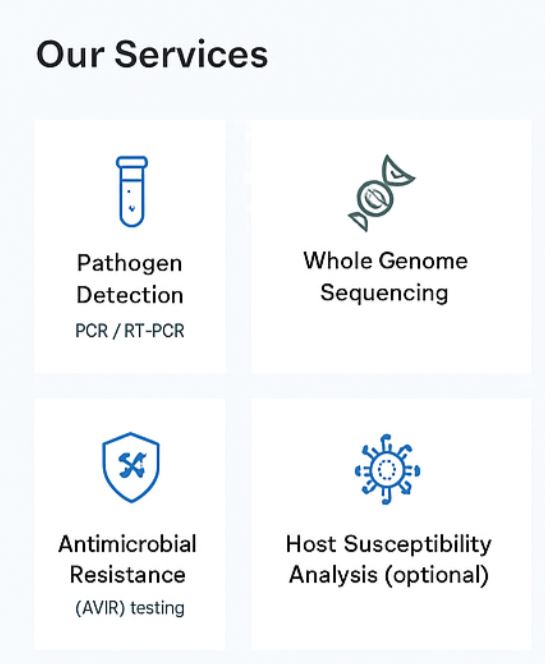
Uses genetic sequencing or molecular assays (PCR, NGS, etc.) to detect and identify infectious agents (bacteria, viruses, fungi, parasites).
Enables rapid and accurate diagnosis, even when cultures are negative or slow-growing.
Identifies virulence factors and antimicrobial resistance (AMR) genes, guiding effective antibiotic or antiviral therapy.
Example: Whole-genome sequencing of Mycobacterium tuberculosis to detect drug resistance mutations
Studies how a patient’s genetic makeup affects susceptibility, immune response, and disease severity.
Helps predict which individuals may develop severe disease or respond poorly to certain treatments.
Example: HLA and cytokine gene variants influencing the course of viral infections like HIV or COVID-19
Personalized medicine: Tailoring infection management based on both pathogen and host genetic data.
Outbreak investigation: Genomic epidemiology helps trace sources and transmission chains in hospitals or communities.
Antimicrobial stewardship: Genomic detection of resistance markers supports targeted therapy and limits misuse of antibiotics.
Vaccine and therapeutic development: Identifying genetic targets in pathogens accelerates the design of effective interventions.
By combining genetic insights with clinical data, infectious genetics allows clinicians to:
Diagnose infections faster and with higher specificity
Choose targeted treatments
Monitor resistance and prevent outbreaks
Improve patient outcomes through precision infection management